Fragmentation
Manual records and repeated work
Spreadsheets and disconnected processes increased effort and made shipment management harder to scale.
UX/UI · Product design · B2B logistics
MyConsole is a shipment management platform designed for Paack’s small and medium-sized business customers. It brings order creation, tracking, status visibility and recurring operational tasks into one coherent interface.
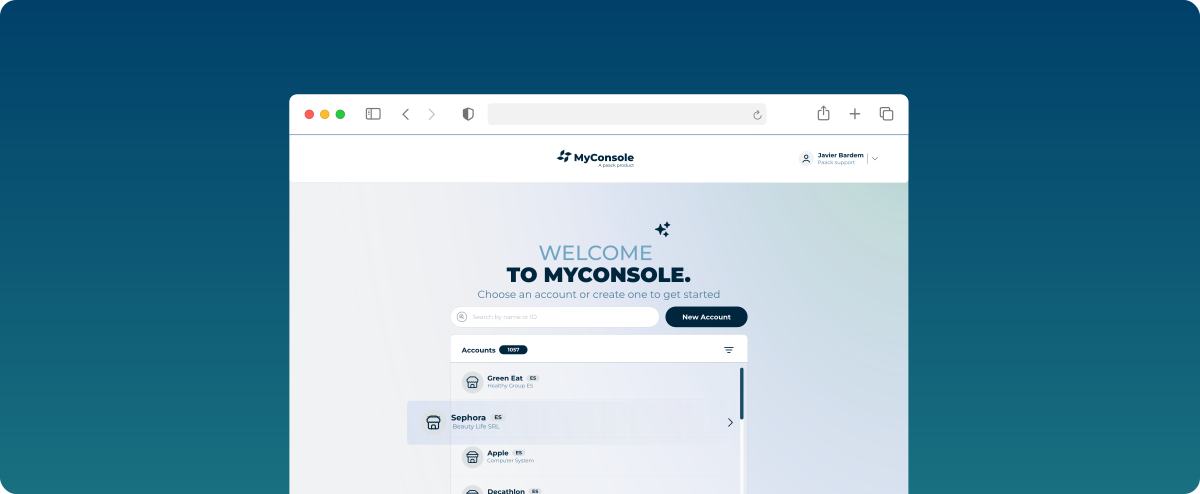
Paack identified an opportunity to support SMB customers that needed a clearer way to create, monitor and manage shipments without adopting a complex enterprise tool.

Spreadsheets and disconnected processes increased effort and made shipment management harder to scale.
Teams needed a faster way to understand what was happening across orders and deliveries.
Manual handoffs and isolated tools made automation, integration and process consistency difficult.
The product direction focused on the essential shipment-management loop rather than reproducing the complexity of a large logistics suite.
Support recurring work with guided forms and CSV upload.
Use search, filters and visible status labels to reduce scanning effort.
Surface the information teams need before they enter detailed workflows.
The research focused on how SMBs managed shipments, where operational friction accumulated and which tools were already part of their workflow.
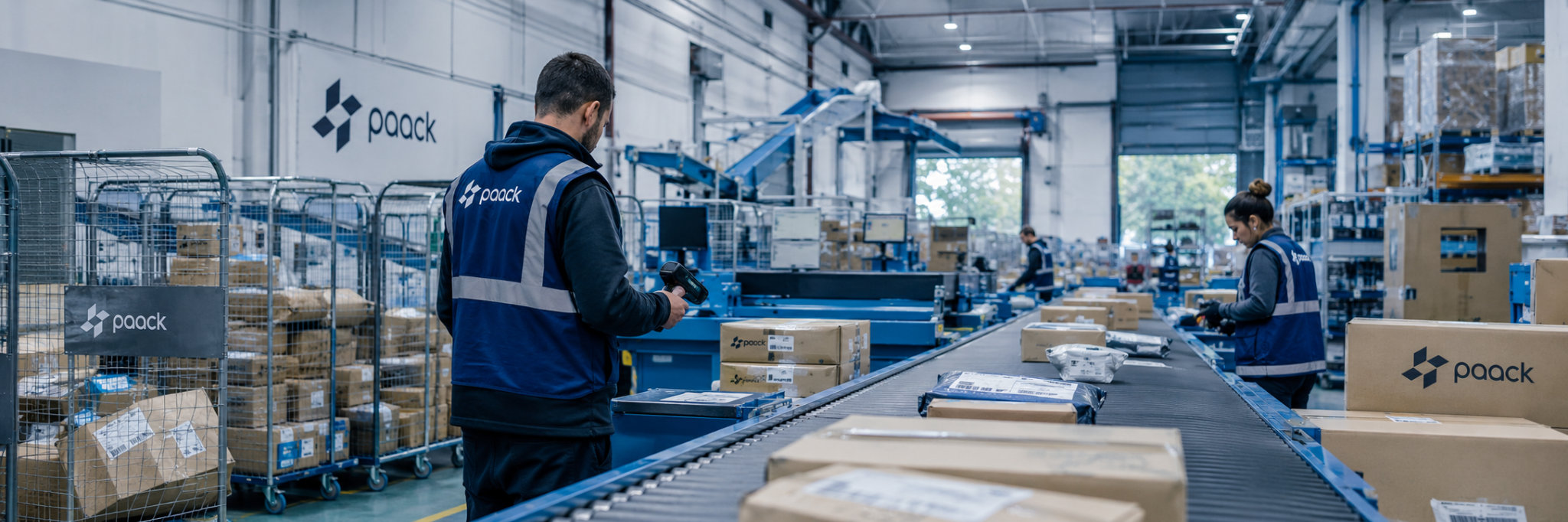
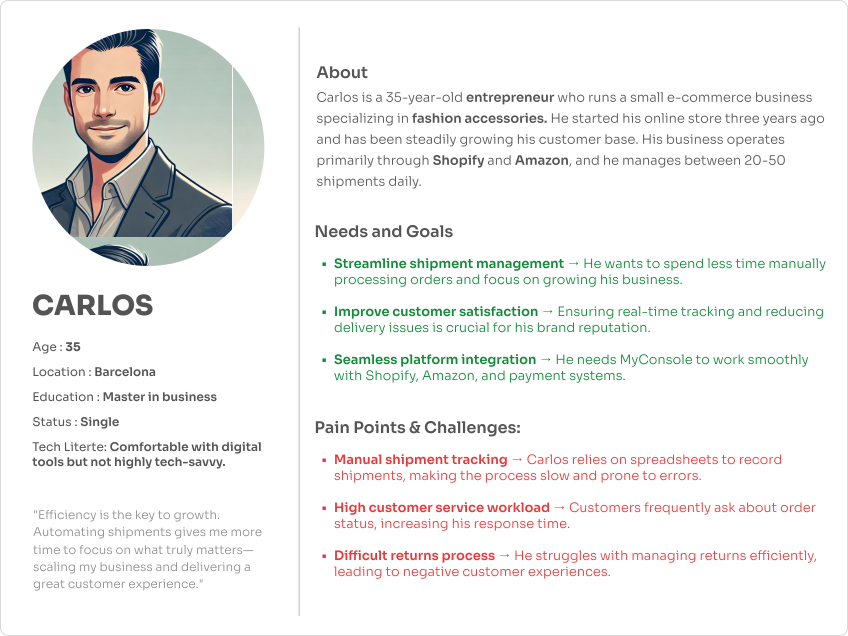
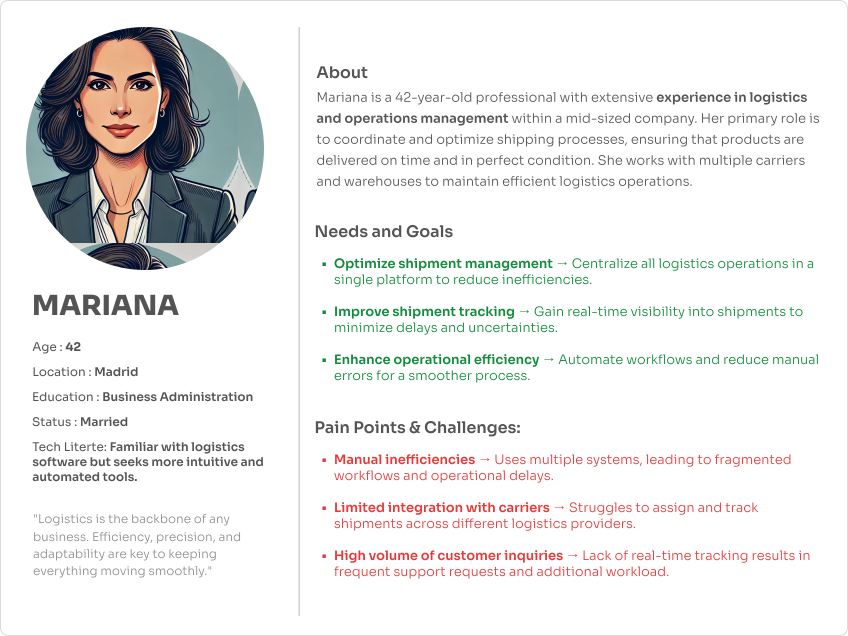
Spreadsheets and manual tracking created duplicated work and increased the risk of mistakes.
Limited shipment visibility made it harder to answer customer questions and manage exceptions.
Businesses operating across sales channels repeated the same tasks in disconnected systems.
The design definition translated the findings into a focused product model: make common tasks easy to start, make shipment status easy to read and create a reusable foundation for future integrations.
Reduce unnecessary steps in order creation, tracking and review.
Use clear hierarchy and consistent labels across dashboards and tables.
Support bulk creation and predictable actions wherever possible.
Create patterns that can support additional channels and logistics services.
Collaborative workshops brought design, engineering, logistics experts and stakeholders together to prioritize the features with the strongest relationship to user needs.
The team generated alternatives, mapped dependencies and used an effort-versus-impact view to organize the most viable ideas.
The prioritized scope centered on order creation, dashboard visibility, repetitive-task support and a clear path toward integrations.
The interface uses a stable navigation model, visible status language and task-focused screens so users can move from overview to action without relearning the product.
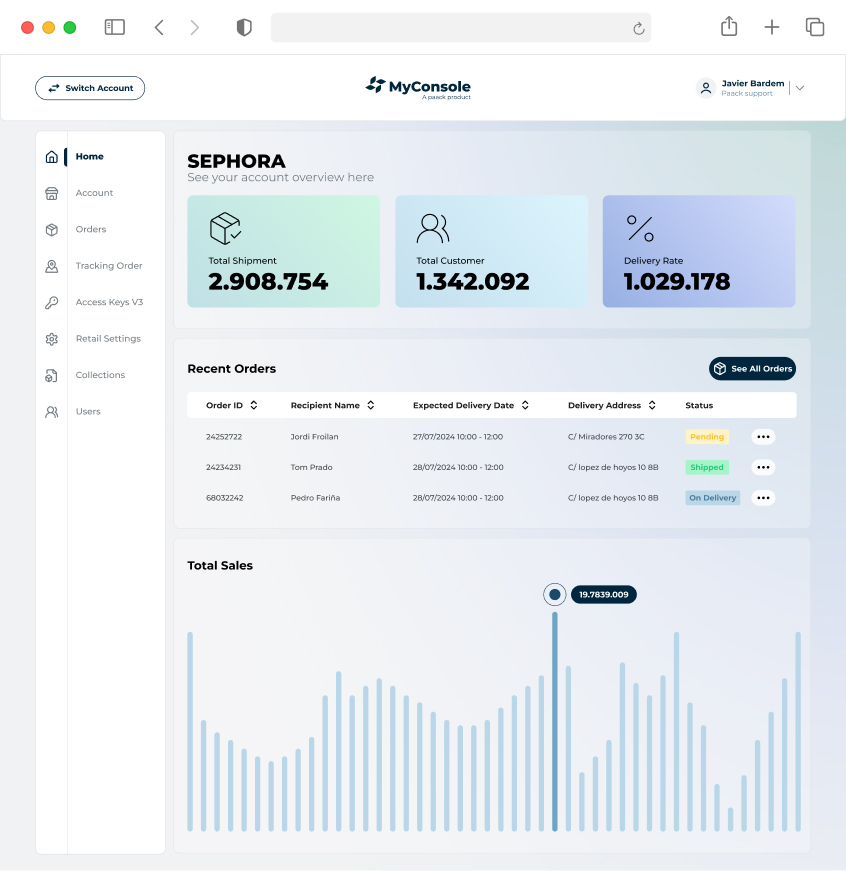
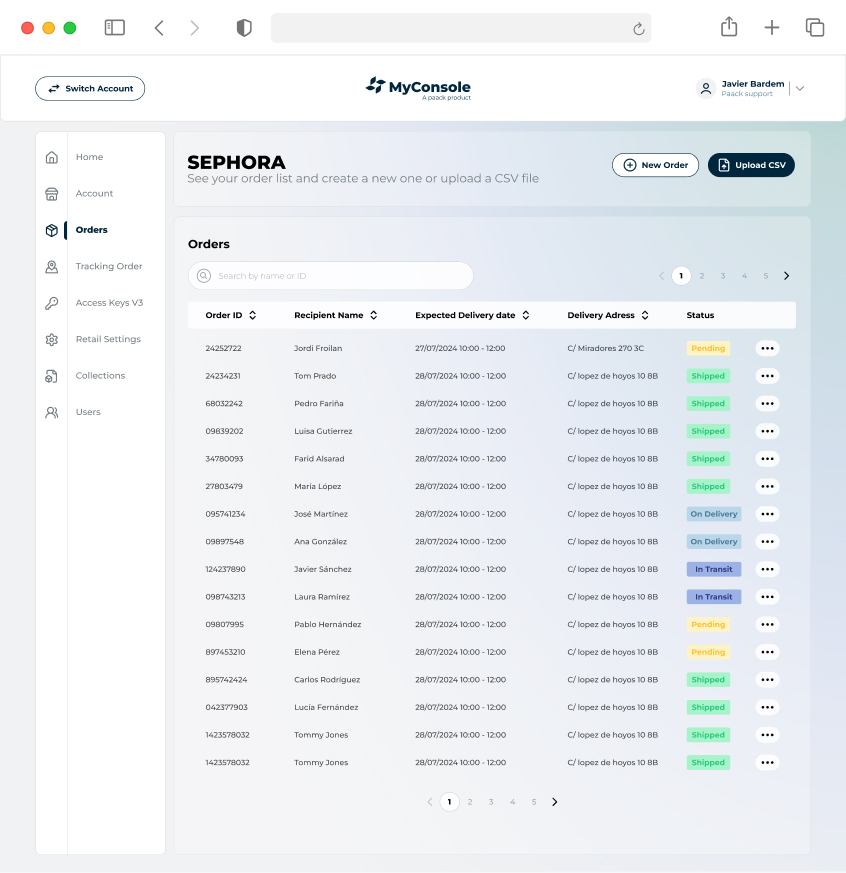
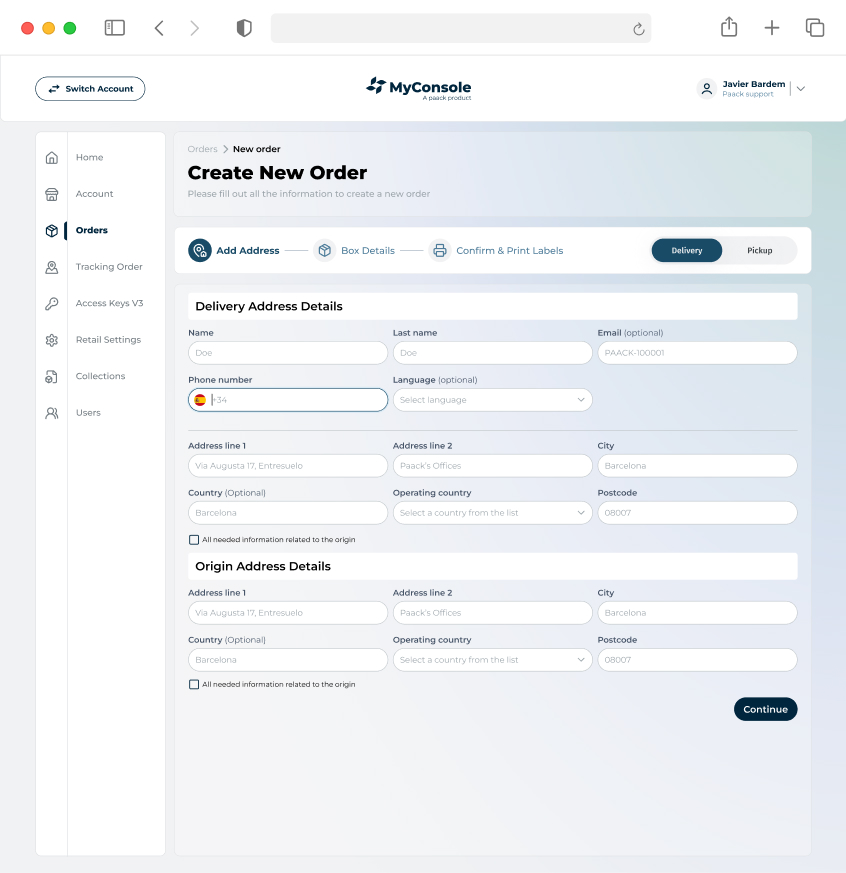
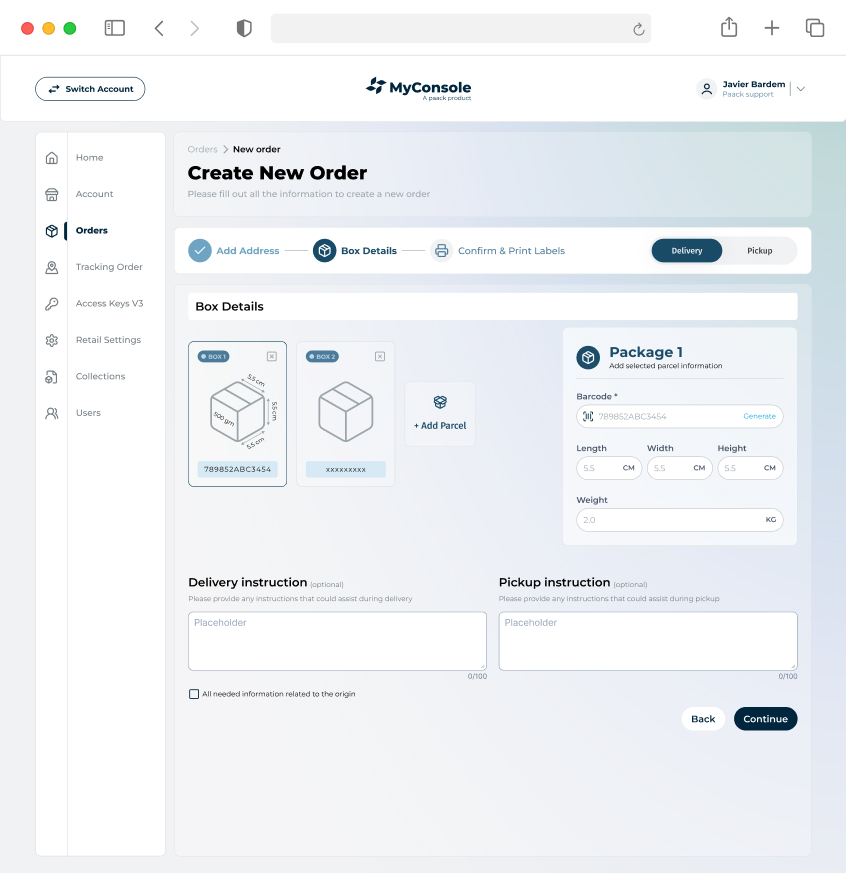
Validation focused on whether people could understand the information architecture, complete key tasks and recover from unclear moments.
Removed unnecessary fields and improved input validation.
Repositioned important actions and simplified access to recurring tasks.
Strengthened labels, color use and supporting icons.
Adjusted messaging and labels to improve system comprehension.
The project aligned the platform around the most important SMB workflows and produced a coherent, testable product direction for continued development.
Order creation, review and tracking were organized within one consistent workspace.
Dashboards, tables and status labels shared a clearer information hierarchy.
The interface patterns support future integrations and additional logistics capabilities.
Expand integrations while preserving a consistent operating model inside MyConsole.
Allow teams to prioritize the metrics, shortcuts and exceptions most relevant to their work.
Investigate shipment assignment and delivery prediction where evidence shows a clear user benefit.
Develop analytics that help users understand patterns without overwhelming the core workflow.
Adapt logistics rules and product language while protecting the consistency of the experience.
Up next
Elit · Ecommerce